Yes, robotic pool cleaners can pick up dog hair, but their effectiveness depends on the cleaner’s design, the type of hair, and how you maintain it. Most modern robotic cleaners use fine mesh filters and specialized brushes that can trap pet hair, but very long or tangled hair may require extra attention. Understanding the factors that affect performance helps you choose the right approach for your pool.


Pros
- Powerful triple-motor suction captures a wide range of debris
- Long battery life delivers up to 125 minutes of cleaning
- App control with scheduling and real-time monitoring
- Smooth navigation over obstacles like drains and seams
- OTA updates ensure the vacuum stays optimized over time
Cons
- No user reviews yet, so real-world performance is unconfirmed
- At 19 pounds, it may be heavier than some competitors
- Battery life may decrease with frequent use over time
The WYBOT B1 is a cordless robotic pool vacuum designed for above-ground or in-ground pools up to 1,220 square feet. It targets pool owners who want a hassle-free cleaning solution without the tether of a cord. With a powerful triple-motor system and six-roller brush, it promises strong suction and smooth navigation.
Standout features include intelligent cleaning modes for floor, wall, waterline, and combination cycles, adapting to various pool shapes. The extended runtime of up to 125 minutes allows thorough cleaning in one session, while the quick clean mode handles routine maintenance in just one hour. The WYBOT app provides convenient control and scheduling, plus OTA updates keep the software current.
The vacuum sports a Luxury Black finish with dimensions 16 x 12 x 17 inches and weighs 19 pounds. Its roller brush design improves traction on drains and uneven surfaces, reducing the chance of getting stuck. The build appears robust, though the weight may make it less portable for some users.
A potential drawback is the absence of user reviews, so independent validation of performance is lacking. Also, the battery is not user-replaceable, and long-term durability remains to be seen. However, the feature set is competitive for its price point.
Overall, the WYBOT B1 offers a compelling combination of cordless convenience, smart features, and powerful cleaning. If you have a medium to large pool and value app control and OTA updates, this robotic vacuum is worth considering.
Pros
- Long 180-minute runtime covers large inground pools efficiently.
- Smart navigation minimizes missed areas for thorough cleaning.
- Powerful dual filtration leaves water crystal clear after each cycle.
- Cordless design eliminates tangling cables and simplifies operation.
- Effective wall climbing ensures a complete clean from floor to waterline.
Cons
- No user reviews yet to confirm long-term reliability and performance.
- At 24 pounds, lifting the unit from the pool may be cumbersome for some users.
- Bluetooth connectivity is required for smart features, which may not suit all preferences.
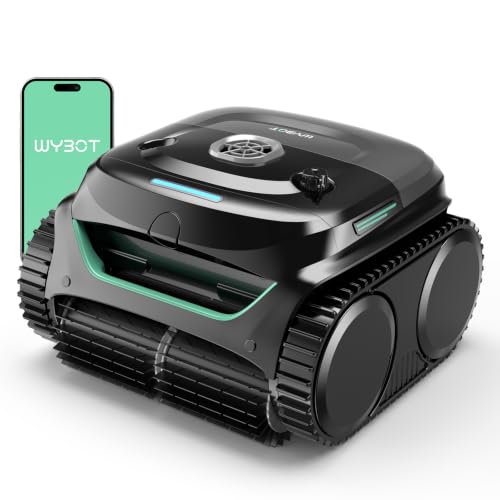
The Wybot C2 is a cordless robotic pool vacuum designed for inground pools, offering a smart, hands-free cleaning experience. With Bluetooth control and intelligent navigation, it is perfect for pool owners who want to save time and effort while maintaining a spotless pool.
Standout features include a gyroscope-guided navigation system that covers up to 2,152 square feet per cycle, ensuring no area is missed. The dual filtration system combines a 10-micron ultra-fine filter and a 180-micron primary filter to capture everything from fine sand to leaves. Three brushless motors provide strong suction for deep cleaning, and the unit climbs walls and steps effectively.
Design and build quality are solid: the glossy black finish is sleek, and the 24-pound weight is manageable for most users. The robot automatically docks at the pool edge when the battery is low, making retrieval easy. It offers seven cleaning modes to adapt to different pool conditions, adding versatility.
Drawbacks include the lack of user reviews, so long-term reliability is unconfirmed. The 24-pound weight may be heavy for some, and Bluetooth connectivity is required for the smart features, which could be a limitation if you prefer a fully autonomous operation without a phone app.
Verdict: The Wybot C2 is a promising cordless pool cleaner with advanced navigation and powerful cleaning capabilities. It is well-suited for inground pools up to 2,152 square feet. While it has minor drawbacks, its features and performance make it a strong contender in the robotic pool cleaner market.
Filter Type: The Key to Capturing Dog Hair
The filter is the most important component for picking up dog hair. Standard cartridge filters often have large pores that let fine hair pass through, while fine mesh filters or ultra-fine filter bags trap hair more effectively. Robotic cleaners with a fine mesh filter are better suited for pet hair because the smaller openings catch the strands rather than letting them return to the pool.
If your robotic pool cleaner uses a standard filter, you may notice that dog hair collects on the filter surface quickly, reducing suction. Upgrading to a finer filter or using a filter specifically designed for pet hair can make a significant difference. Some models offer filter canisters that are easier to clean, which is a must if you have a dog that sheds heavily.
Brush Design: How Brushes Affect Hair Pickup
Brushes play a crucial role in dislodging dog hair from pool surfaces and guiding it toward the suction intake. Robotic cleaners with rubber or foam brushes tend to be more effective than those with hard plastic bristles because they create a sweeping motion that lifts hair without pushing it away. Brushes that are too stiff may actually flatten hair against the pool floor, making it harder to pick up.
Look for a cleaner with dual brushes that rotate in opposite directions. This design channels debris, including hair, toward the center of the cleaner where the suction is strongest. Some robotic cleaners also have a brush that is specifically designed for fine debris, which can improve hair pickup performance.
Hair Length and Type: Not All Dog Hair Is the Same
Short, fine dog hair is generally easier for robotic pool cleaners to capture than long, coarse hair. Long hair can wrap around brushes or clog the filter more quickly, reducing the cleaner’s efficiency. If your dog has long hair, you may need to clean the filter and brushes after every cleaning cycle to prevent buildup.
Hair that is wet and matted can also be more challenging. Wet hair tends to clump together, which can be too large for the suction intake or may get stuck in the cleaner’s internal pathways. Regular maintenance, such as rinsing the filter and removing hair from brushes, helps keep the cleaner running smoothly.
Pool Surface and Cleaning Schedule
The surface of your pool affects how well a robotic cleaner picks up dog hair. Smooth surfaces like vinyl or fiberglass allow hair to be swept up easily, while textured surfaces like plaster or concrete can trap hair in crevices. A robotic cleaner with strong suction and aggressive scrubbing is better suited for textured surfaces.
How often you run the cleaner also matters. If you let dog hair accumulate for several days, it can become tangled or settled into the pool’s crevices, making it harder to remove. Running the cleaner daily during shedding season keeps the hair from building up and reduces the strain on the filter and brushes.
Maintenance: Keeping Your Cleaner Effective for Dog Hair
Even the best robotic pool cleaner will struggle with dog hair if it isn’t maintained properly. The filter should be cleaned after each use if you have a dog that sheds. Hair that is left in the filter can clog the pores and reduce suction, allowing hair to escape back into the pool. Brushes should also be checked regularly for hair wrapped around them, which can impede rotation.
Periodically, you should also inspect the suction inlet and internal hoses for any hair that may have passed through the filter. A complete cleaning of the cleaner every few weeks, especially during heavy shedding seasons, prevents clogs and extends the life of the machine.
How to Get the Best Results with Your Robotic Pool Cleaner
To maximize your robotic pool cleaner’s ability to pick up dog hair, follow these steps:
- Use a fine mesh filter designed for pet hair, or upgrade the filter if your current one lets hair pass through.
- Choose a model with dual rubber or foam brushes that sweep hair toward the suction intake.
- Run the cleaner daily during shedding seasons to prevent hair from settling or tangling.
- Clean the filter and brushes after every use, removing any hair that has accumulated.
- Inspect the cleaner’s internal pathways and suction inlet regularly for hidden clogs.
For a deeper understanding of how these machines navigate your pool and why that matters for hair pickup, read our guide on how robotic pool cleaners move underwater. The mechanics of movement directly affect how thoroughly they cover every surface.
Frequently Asked Questions
Will any robotic pool cleaner pick up dog hair?
Most robotic pool cleaners can handle some dog hair, but models with fine mesh filters and rubber brushes perform best. If you have a heavy shedding dog, look for a cleaner specifically designed for fine debris or pet hair.
What type of filter is best for dog hair in a pool cleaner?
Ultra-fine mesh filters or filter bags are the most effective for capturing dog hair. They have smaller pores that trap hair rather than letting it pass through. Standard cartridge filters may allow fine hair to escape back into the pool.
Can dog hair damage my robotic pool cleaner?
Dog hair itself won’t damage the cleaner, but it can cause clogs and reduce suction if not cleaned regularly. Hair wrapped around brushes can also wear down the brush material over time, so routine maintenance is important.
How often should I clean the filter if I have a dog?
During heavy shedding seasons, clean the filter after every cleaning cycle to prevent hair from clogging the pores. In off seasons, you may be able to clean it every two or three cycles, but check it regularly.
Do robotic pool cleaners work on all pool surfaces for dog hair?
They work on most surfaces, but textured surfaces like plaster can trap hair in crevices, making it harder to pick up. A cleaner with strong suction and aggressive scrubbing is better for these surfaces. Smooth surfaces like vinyl are easier.
Related Guides
- Best Robot Pool Cleaner Brand
- How Do Robotic Pool Cleaners Map a Pool
- How Do Robotic Pool Cleaners Clean Steps?
Final Thoughts
Robotic pool cleaners can effectively pick up dog hair, especially when you choose the right filter and brush and maintain them regularly. For a more detailed look at how navigation technology helps these cleaners cover every inch of your pool, check out our article on how AI navigation works in robotic pool cleaners.