Yes, robotic pool cleaners can remove dead algae, but only if the algae has settled and the cleaner is equipped with an appropriate filtration system. Dead algae particles are often very fine and can pass through standard mesh filters, so the cleaner must have a fine filter cartridge or bag to capture them effectively. Additionally, the cleaner must be able to reach the pool floor and walls where dead algae accumulates. Without proper water chemistry and brushing first, a robotic cleaner alone may not fully clear the cloudiness.
Pros
- Wall-climbing capability ensures thorough cleaning of pool sides and steps.
- Active scrubbing brush reduces manual labor and protects pool surfaces.
- Easy top-load filter access simplifies debris removal and maintenance.
- Quick plug-and-play setup with no complex installation required.
- Suitable for a wide range of pool shapes and sizes up to 33 ft.
Cons
- May not be ideal for very large pools exceeding 33 feet in length.
- Filter may need frequent cleaning in pools with heavy debris like leaves or sand.
- Price point is higher than some basic robotic cleaners, but offers advanced features.
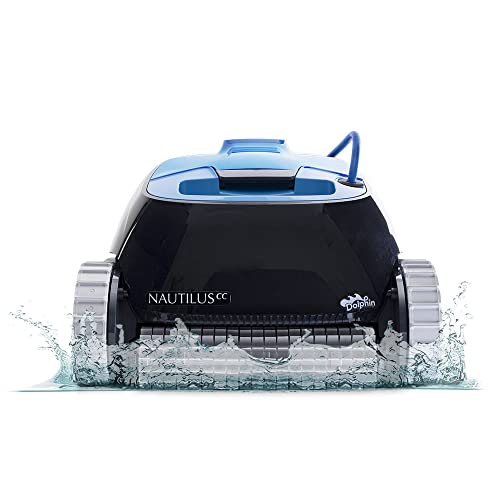
The Dolphin Nautilus CC is a robotic pool cleaner designed to take the hassle out of pool maintenance. It is best suited for owners of above-ground or in-ground pools up to 33 feet in length who want a set-it-and-forget-it solution. With its wall-climbing ability and active scrubbing brush, this unit promises a thorough clean without manual effort.
Standout features include the top-load filter basket, which makes emptying debris quick and mess-free. The plug-and-play system means you can start cleaning in minutes: just plug it in, drop it in the water, and let it run for about two hours. Real-world performance is strong on walls and floors, though heavy debris may require more frequent filter cleaning.
Design-wise, the Nautilus CC is compact and lightweight at under 15 pounds, making it easy to lift in and out of the pool. The blue/black color scheme is standard, and the build quality feels durable. Dolphin has a legacy of reliability, and this model continues that tradition with robust materials and a simple interface.
One potential drawback is that the filter basket, while convenient, can fill up quickly in pools with lots of leaves or sand, requiring attention mid-cycle. Also, the price is higher than entry-level cleaners, but the added wall scrubbing and filter ease justify the cost for many users.
Overall, the Dolphin Nautilus CC is an excellent choice for pool owners who value convenience and effective cleaning. It delivers on its promises with minimal fuss, making it a worthwhile investment for maintaining a sparkling pool. If your pool fits within the size limit and you want to reduce manual work, this cleaner is highly recommended.


Pros
- Wall climbing feature cleans both floors and walls, reducing manual scrubbing.
- Active scrubbing brush provides deep cleaning without damaging pool surfaces.
- Easy top-load filter basket simplifies maintenance.
- Plug and play operation makes it user friendly, no complicated installation.
- Dolphin brand reputation for reliability and performance.
Cons
- Designed for in-ground pools only, not suitable for above-ground pools.
- No remote control or smartphone app for manual direction, relies on autonomous navigation.
- Initial investment may be higher compared to manual pool cleaning tools.
The Dolphin Nautilus CC Plus is a fully automatic robotic pool cleaner specifically engineered for in-ground pools up to 40 feet in length. It is best suited for pool owners who want a hands free cleaning solution that handles both floors and walls with minimal intervention.
Standout features include its active scrubbing brush which combines wall climbing power with a continuous scrub action. This means it loosens and removes stubborn dirt, algae, and debris from pool surfaces without the need for manual brushing. The top load filter basket is another highlight, allowing quick removal of captured debris for consistently clear water.
In real world performance, the plug and play design truly simplifies pool maintenance. Simply connect the power supply, drop the unit into the water, and let it run for about two hours. Its smart navigation ensures thorough coverage even around obstacles and irregular shapes. The build quality reflects Dolphin's40 plus year legacy in pool care, using durable materials to withstand constant submersion and chemical exposure.
One potential drawback is its limitation to in ground pools only, so owners of above ground pools will need a different model. Also, there is no manual remote control, but the autonomous navigation is generally effective. At just over20 pounds, it is easy to lift but may be heavy for some users. Overall, the NautilusCC Plus offers exceptional value for those seeking a reliable, low maintenance robotic cleaner.Final verdict: For in ground pool owners who value convenience and thorough cleaning, the Dolphin Nautilus CC Plus is a top choice. Its wall climbing scrubbing action, easy filter access, and set and forget operation make it a worthwhile investment that saves time and effort.
Brand: Dolphin
Model: Nautilus CC Plus
Color: Black
Dimensions: 16 x 10 x 16 inches
Weight: 20.8 pounds
Compatibility: In ground pools up to 40 feet in length
Cleaning Cycle: Approximately 2 hours

Why Dead Algae Persists Even After a Robotic Cleaner Runs
Dead algae often clumps together or settles into a fine dust that a normal robotic cleaner’s filter cannot trap. Many standard filters capture particles down to 100 microns, but dead algae can be as small as 10 to 30 microns. This means the cleaner may recirculate tiny particles back into the water, leaving it cloudy.
Another factor is the cleaner’s brush system. If the brushes are worn or not aggressive enough, they may not dislodge algae that has adhered to pool surfaces. The cleaner then simply glides over the algae without picking it up.
The Role of Water Chemistry in Dead Algae Removal
Water chemistry is critical because dead algae can only be filtered effectively once it is fully oxidized. If chlorine levels are too low or pH is off, the algae may remain sticky and resist removal. A robotic cleaner works best after the water has been properly shocked and balanced.
Additionally, high phosphates or nitrates can cause algae to regrow quickly, making the dead algae removal process seem ineffective. Keep your water balanced to give the robotic cleaner a fighting chance.
Filter Type and Cleaner Design Matter
Robotic pool cleaners come with different filter options: mesh bags, cartridge filters, or fine pleated filters. For dead algae, a fine pleated filter or a very fine mesh bag (under 50 microns) is required. Some cleaners offer optional ultra-fine filters designed specifically for algae and pollen.
The cleaner’s navigation also matters. If it uses random motion, it may miss areas. More advanced models with AI navigation or wall-climbing ability can cover more surface area, including walls and steps where dead algae often settles. This improves overall removal efficiency.
How to Help Your Robotic Cleaner Remove Dead Algae Effectively
To maximize dead algae removal, follow these steps:
- Shock and balance your pool water before running the cleaner.
- Brush the pool walls and floor manually to loosen dead algae beforehand.
- Install an ultra-fine filter cartridge or bag designed for fine particles.
- Run the cleaner for a longer cycle, and clean the filter mid-cycle if needed.
- Check the cleaner’s brushes and replace them if worn.
If you’re unsure which brush type helps most with dislodging algae, our guide on the best pool cleaner wall climbing brush explains how different brush designs affect cleaning performance on walls and floors.
Frequently Asked Questions
How long does it take a robotic pool cleaner to remove dead algae?
It depends on the amount of algae and the cleaner’s filter efficiency. Typically, you may need to run the cleaner for 2 to 4 hours, then clean the filter and run again. In severe cases, multiple cycles over a day or two are needed.
Do I need to brush the pool before using a robotic cleaner for dead algae?
Yes, brushing helps loosen algae that has adhered to surfaces. Without brushing, the cleaner may not be able to dislodge it, especially if the algae has formed a biofilm. Brush walls and floor thoroughly before running the cleaner.
Can a robotic cleaner remove dead algae from pool walls?
Yes, if the cleaner has wall-climbing capability and effective brushes. Some robotic cleaners are designed to climb walls and scrub them, which helps remove dead algae. However, very fine algae dust may still require a special filter to capture.
What happens if the robotic cleaner’s filter is too coarse for dead algae?
The fine particles will pass through the filter and be returned to the pool, leaving the water cloudy. You may need to upgrade to a finer filter or use a flocculant to clump the algae before filtering.
Related Guides
- Best Robot Pool Cleaner Brand
- How Do Robotic Pool Cleaners Map a Pool
- How Do Robotic Pool Cleaners Clean Steps?
Final Thoughts
Robotic pool cleaners can remove dead algae, but they are not a magic solution. For the best results, combine proper water chemistry, manual brushing, and a fine filter. For more on how these cleaners navigate effectively, see our article on how robotic pool cleaner navigation works.