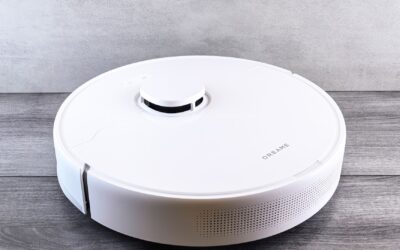
Robotic pool cleaners can pick up leaves, but only small, lightweight debris and fine leaf fragments. Most robotic models struggle with whole leaves, twigs, and heavy organic matter because their intake systems and filter baskets are designed for fine sediment, not bulk debris. If your pool gets a lot of leaf fall, a robotic cleaner alone won’t keep up without regular manual removal first.

Pros
- Dual charging provides flexibility and extended runtime.
- Large 6L basket minimizes maintenance intervals.
- App control offers convenient remote operation and monitoring.
- Ultrasonic obstacle avoidance prevents getting stuck on pool features.
- Anti-tangle design reduces manual intervention.
Cons
- Solar charging is slower and dependent on sunlight; DC adapter needed on cloudy days.
- No user reviews available yet, so long-term reliability is unverified.
- App may require stable Wi-Fi; may not suit very large or heavily debris-laden pools.
The BOTLUXE Solar Pool Skimmer Robot is a versatile cleaning solution designed for in-ground pools. It targets pool owners looking for an eco-friendly, automated way to handle surface debris like leaves, pollen, and pet hair. With dual charging and smart app control, it offers convenience and sustainability in one package.
Its standout feature is the dual charging capability: DC fast charge in 2.5 hours or solar charge in 5-6 hours, delivering up to 20 hours of runtime. The dual motors and roller brush effectively capture debris, while the 180μm mesh net catches even fine particles. The 6L basket means less frequent emptying, and the app control allows real-time adjustments.
The robot features a compact design (10x8x5 inches) in light blue, with intelligent obstacle avoidance using ultrasonic sensors. Anti-tangle technology ensures smooth operation around obstacles. The build feels durable, though the plastic construction might not withstand heavy impacts.
Potential drawbacks include the reliance on sunlight for solar charging; on cloudy days you'll need the DC adapter. Additionally, there are no user reviews yet, so long-term reliability is unproven. The app may require a stable Wi-Fi connection, and the robot might struggle with very large debris like branches.
Overall, the BOTLUXE Solar Pool Skimmer Robot offers a compelling mix of features at a competitive price. It's ideal for pool owners who want to reduce manual cleaning and energy costs. While it has some limitations, its dual charging and smart controls make it a strong contender in the robotic skimmer market.
Color: Light blue
Dimensions: 10 x 8 x 5 Inches
Product Group: Lawn & Patio
Charging Options: Solar (5-6 hours), DC Fast (2.5 hours)
Basket Capacity: 6 Liters
Mesh Size: 180 μm

Pros
- Long battery life with consistent suction throughout the cycle.
- Large capacity filter basket reduces emptying frequency.
- Cordless operation with automatic parking for convenience.
- Effective on various debris types including fine sand and silt.
- Easy to use with one-button start and rapid water drainage.
Cons
- May struggle with steep slopes beyond 10 degrees.
- Battery life may be shorter in real-world use with heavy debris.
- No app connectivity or programmable scheduling.
The Zebary Cordless Robotic Pool Cleaner is a 2026 upgrade designed for both above-ground and inground pools up to 2200 square feet. It targets pool owners who want a cord-free, automatic cleaning solution without the hassle of hoses and external pumps. With a 180-minute runtime, it aims to complete a full cleaning cycle on a single charge.
Standout features include consistent suction that does not drop as the battery drains, thanks to a high-density battery. The dual suction inlets provide wider debris intake, and the 3-liter fine mesh filter captures particles as small as 180 microns. Real-world performance should handle leaves, sand, and dirt effectively on flat floors and surfaces up to a 10-degree slope.
Design and build quality emphasize portability and convenience. The unit weighs significantly less than traditional cleaners and features a one-touch start with rapid 10-second water drainage. The auto-parking system uses water sensors to park near the wall when done, and the included retrieval hook allows dry-hand removal. The gray-purple color gives it a modern look.
Potential drawbacks include limited slope capability (only up to 10 degrees) which may not suit pools with steep inclines. Additionally, there is no smart connectivity or scheduling, so it operates on a simple one-button cycle. Battery life is advertised at 180 minutes, but heavy debris loads could reduce actual runtime.
Overall, the Zebary Cordless Robotic Pool Cleaner offers strong value for its price, with a large filter basket and long runtime that minimize maintenance. It is best for pool owners seeking an affordable, easy-to-use cordless cleaner that handles typical debris well. The lack of advanced features is offset by its straightforward reliability.
Color: Graypurple
Dimensions: 17.3 x 11.8 x 7.5 inches
Product Group: Lawn & Patio
Battery: High-density, 180-min runtime
Filter: 3L, 180μm fine mesh
Suction: Dual inlets, up to 2200 sq.ft coverage
Auto-Parking: Yes, with water sensors
Weight: Lightweight (not specified but claimed)



Small Leaves and Fine Debris
Robotic cleaners work best on small leaf fragments and fine particles that fall through the water column and settle on the floor. Once leaves break down into smaller pieces, the cleaner’s suction system can pull them into the filter basket without clogging. This happens naturally over time as leaves decompose in the water.
The filter basket in most robotic models has small mesh openings designed to trap sand, algae, and silt. Tiny leaf pieces pass through these openings easily and get caught. However, fresh whole leaves are too large and fibrous to move through the intake without jamming the motor or blocking the filter.
Whole Leaves and Large Debris
Whole leaves, twigs, and large plant matter will clog a robotic cleaner’s intake or wrap around its brush. When debris is too large to fit through the intake opening, the motor works harder, heats up, and may shut down as a safety measure. This is the most common reason robotic cleaners stop working mid-cycle during heavy leaf season.
Even if a leaf makes it partway into the system, it can tangle with the brush or get stuck in the impeller, preventing water flow and forcing you to disassemble the cleaner for manual removal. This defeats the purpose of an automated system and can damage internal components over time.
Leaf Type and Density
Thin, papery leaves break down faster and are less likely to cause clogs than thick, waxy leaves or needles from evergreen trees. Deciduous leaves tend to soften and fragment within a few days, making them easier for the cleaner to handle. Conifer needles, on the other hand, stay rigid and can tangle in moving parts.
Leaves with high tannin content, like oak leaves, also resist breaking down and can stain pool water while sitting on the floor. If your yard has multiple tree types, expect varying degrees of difficulty depending on which species’ leaves are falling at any given time.
Pool Location and Leaf Volume
Pools surrounded by trees or near deciduous forests will collect far more leaf debris than pools in open yards. During fall months, the volume of leaves entering the water may exceed what a robotic cleaner can process in a single cycle. If leaves are accumulating faster than the cleaner can remove them, they pile up and create a maintenance backlog.
Leaf volume also affects filter saturation. A full filter basket reduces suction power and efficiency, meaning the cleaner spends more time running to accomplish less work. Regular filter emptying becomes essential in high-leaf-fall environments.
Filter Basket Capacity and Design
Different robotic models have filter baskets of varying sizes and mesh densities. A larger basket holds more debris before clogging, while finer mesh catches more particles but clogs faster. Some designs include pre-filters or leaf traps that catch larger pieces before they reach the main filter, extending the time between cleanings.
The cleaner’s motor power also affects its ability to handle partial leaf blockages. A more powerful motor can push through minor clogs that would stall a weaker model. However, no standard robotic cleaner is designed to process whole leaves as its primary function.
Seasonal Timing and Water Conditions
Leaves sink at different rates depending on water temperature and whether they’re fresh or waterlogged. Fresh leaves float initially, so a robotic floor cleaner won’t reach them until they sink. Cold water slows decomposition, keeping leaves intact longer and increasing clogging risk.
Leaves that have been in the water for several days become saturated and break apart more easily, making them friendlier to the cleaner’s intake system. Running your cleaner after leaves have had time to soften yields better results than running it immediately after a heavy fall.
How to Handle Leaves With a Robotic Cleaner
- Skim the pool surface with a net to remove floating leaves before running the robotic cleaner.
- Empty the robotic cleaner’s filter basket after each cycle, especially during leaf season.
- Run the cleaner during off-peak times so you can monitor for clogs and shut it down if needed.
- Wait a few days after heavy leaf fall so leaves have time to sink and break down slightly.
- Clean or replace the filter more frequently than normal if you live in a heavily wooded area.
- Consider a pre-filter or leaf trap attachment if your model offers one.
These steps help robotic cleaners work more effectively with leaf debris. However, if your pool sits under dense tree cover, you may need supplemental manual skimming or a different cleaning approach during fall months.
Frequently Asked Questions
Will leaves damage my robotic pool cleaner?
Whole leaves can damage a robotic cleaner by clogging the intake, tangling the brush, or overheating the motor. Occasional leaves won’t cause permanent harm, but repeated exposure to heavy leaf debris may wear out internal components faster than normal use.
Can robotic cleaners pick up leaves from the pool floor?
Yes, robotic cleaners can pick up leaf fragments and partially decomposed leaves from the floor. Whole leaves that have broken down into smaller pieces get pulled into the filter basket easily. Fresh, intact leaves are too large and will clog the system.
What should I do if my robotic cleaner gets stuck on leaves?
Stop the cleaner immediately and remove it from the pool. Check the intake opening, filter basket, and brush area for tangled debris. Clear any blockages by hand, rinse the filter, and restart the cleaner. If it keeps getting stuck, manual skimming before each cycle is your best option.
Is it better to use a robotic or manual cleaner if I have a lot of trees?
Heavy leaf fall often requires a combination approach: use a skimmer net for surface leaves, then run a robotic cleaner for floor debris once leaves have settled and broken down. A robotic cleaner alone won’t keep up with constant leaf input from dense tree coverage.
Do all robotic pool cleaners handle leaves the same way?
No, robotic models vary in motor power, filter design, and intake size. Some are more tolerant of debris than others, but no standard robotic cleaner is optimized for whole-leaf removal. Always check the manufacturer’s guidelines for your specific model.
Related Guides
- Can Robotic Pool Cleaners Pick Up Sand?
- Can Robotic Pool Cleaners Remove Algae?
- Best Robotic Pool Cleaner Under $1500
- Best Robotic Pool Cleaners for Premium Pools in 2026
The Bottom Line
Robotic pool cleaners can pick up leaves that have broken down into small fragments, but they struggle with whole leaves and heavy organic debris. In yards with significant tree cover, manual skimming before running your cleaner keeps both your pool and the equipment in better condition. Regular filter maintenance during leaf season extends the life of your robotic cleaner and maintains its efficiency.