
Yes, you can leave a robotic pool cleaner in your pool overnight in most cases, but whether you should depends on your cleaner’s design, your pool’s condition, and your local climate. Most modern robotic cleaners are built to operate continuously without damage, yet leaving one running unattended all night introduces risks that vary by model and circumstance. Understanding these factors helps you make the safest choice for your equipment and water quality.

Your Cleaner’s Design and Warranty
Different robotic pool cleaners have different operating limits. Some models are designed for extended, continuous runtime and handle overnight operation without issue, while others are meant for shorter, supervised cleaning cycles. Check your cleaner’s manual or manufacturer specifications to see if overnight operation is explicitly permitted or discouraged.
Running your cleaner beyond its recommended hours can void the warranty and accelerate wear on the motor, pump, and internal components. If your warranty explicitly prohibits overnight use or limits daily runtime, leaving it in the pool overnight puts your investment at risk if something fails.
Motor and Battery Fatigue
Robotic pool cleaners rely on electric motors and, in cordless models, rechargeable batteries. Continuous overnight operation stresses these components more than daytime use because the cleaner never gets a rest cycle to cool down. Extended runtime without breaks shortens the lifespan of the motor and battery, sometimes significantly.
If your cleaner uses a battery, overnight operation drains it completely, which can degrade battery health over time. Allowing the battery to fully discharge repeatedly reduces its total lifespan and may eventually leave you with a cleaner that won’t hold a charge long enough to finish a full pool cycle.
Debris Accumulation and Clogging
Overnight, your pool may accumulate debris that a robotic cleaner cannot handle well, such as leaves, twigs, or algae blooms. If the cleaner’s filter basket or intake becomes clogged during the night, the motor works harder and may overheat. A stuck or jammed cleaner left unattended can damage itself or fail to clean your pool effectively.
Without someone present to notice a problem, a clogged cleaner could run all night with reduced efficiency or even stop working entirely. Morning inspection might reveal a cleaner that has been sitting idle for hours, which wastes energy and leaves part of your pool uncleaned.
Entanglement and Cord Damage
Corded robotic cleaners are tethered to a power supply by a long cable. Overnight movement, water currents, and the cleaner’s own motion can cause the cord to wrap around pool features, ladder rungs, or the cleaner itself. Over hours of unattended operation, a tangled cord can restrict the cleaner’s movement, damage the cord’s insulation, or create a safety hazard.
A frayed or punctured cord left in water overnight poses an electrical risk. Regular inspection and manual cord management during daytime operation prevent these issues, but overnight operation removes your ability to catch and fix a problem in real time.
Water Chemistry and Algae Growth
A robotic cleaner removes debris and helps circulate water, but it does not sanitize or balance chemistry. Leaving it running overnight does not prevent algae blooms or maintain chlorine levels. In fact, a cleaner that runs all night may stir up settled debris or disturb algae without actually removing the underlying chemical imbalance.
If your pool chemistry is not stable, overnight cleaner operation can make morning conditions worse, not better. Proper sanitization and chemical balance must happen independently of your cleaning schedule.
Noise and Neighbor Considerations
Most robotic cleaners produce a noticeable hum or whirring sound during operation. Running one overnight, especially in a residential area or if your pool is close to your neighbors’ homes, can disturb sleep or violate local noise ordinances. Even if the sound does not bother you, it may create tension with neighbors.
How to Decide and Protect Your Equipment
- Review your cleaner’s manual to confirm overnight operation is supported by the manufacturer.
- Set a timer or alarm to remove the cleaner after a reasonable runtime, typically 4-6 hours, rather than leaving it all night.
- Inspect the pool for large debris, leaves, and algae before running the cleaner, so it does not get clogged overnight.
- Check and untangle the power cord if your cleaner is corded, and position it away from sharp pool edges.
- Maintain your pool’s chemical balance and sanitizer levels independently; do not rely on the cleaner to compensate for poor chemistry.
- Clean the cleaner’s filter basket in the morning so it is ready for the next use and debris does not sit inside overnight.
For most households, daytime or early-evening operation with manual removal after a few hours is the safest approach. If you want extended cleaning coverage, consider running the cleaner during predictable times when you can monitor it or check on it periodically.
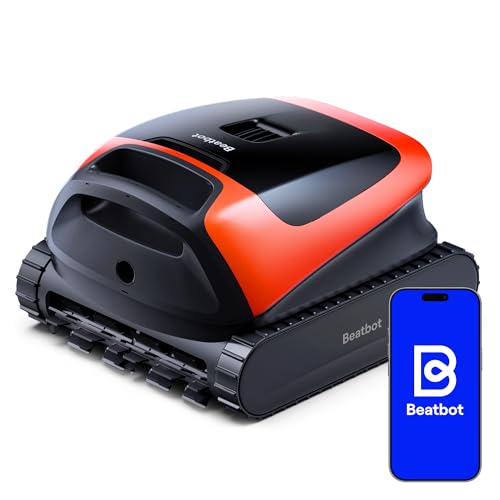
Top-Rated Replacement Picks
If the fixes above don’t solve the problem, or your current pool robot is simply worn out, these well-reviewed options are worth a look.


Frequently Asked Questions
Will my robotic pool cleaner get stuck overnight?
Yes, it can. Debris accumulation, cord tangling, or an uneven pool floor may trap your cleaner overnight. Without supervision, you will not notice the problem until morning, and the cleaner may have been stuck for hours, wasting energy and leaving parts of your pool uncleaned.
Does leaving a robotic cleaner in the pool overnight damage the motor?
Continuous overnight operation can accelerate motor wear because the motor never rests or cools down. Most motors are designed for intermittent use, not 24/7 runtime. Over time, this shortens the motor’s lifespan and may void your warranty if overnight use is not explicitly approved.
Can I leave a cordless robotic cleaner overnight?
Cordless models are safer overnight than corded ones because there is no cord to tangle or create an electrical hazard. However, continuous overnight operation still drains the battery completely, which degrades battery health. Check your model’s specifications to see if overnight operation is recommended.
What happens if my robotic cleaner runs out of battery overnight?
If your cordless cleaner’s battery dies overnight, the cleaner stops mid-pool and sits idle until morning. Repeated full discharges reduce battery capacity and lifespan. Your pool also remains partially uncleaned, and you will need to recharge and run the cleaner again the next day.
Is it bad to leave a robotic pool cleaner in the pool when not in use?
Leaving a cleaner sitting idle in the pool for days or weeks can allow algae, mineral deposits, and debris to accumulate on its exterior and inside its filter. Before each use, rinse the cleaner and check its basket. Long-term storage should happen outside the pool in a dry location.
Related Guides
- How Do Robotic Pool Cleaners Work?
- How Does a Cordless Robotic Pool Cleaner Work
- Best Robotic Pool Cleaner with 70 ft Cable
- Best Robotic Pool Cleaner for 70 Foot Pool
Summary
Can I leave robotic pool cleaner in pool overnight?
Technically yes for most models, but it risks motor wear, battery degradation, clogging, and cord damage. The safest approach is daytime or early-evening operation with manual removal after a few hours of runtime.


