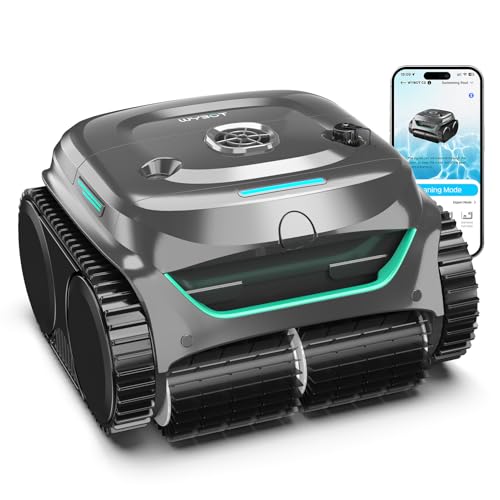
Smart mapping on robotic pool cleaners works by using sensors, cameras, or gyroscopes to create a digital map of your pool, allowing the robot to plan efficient cleaning routes and avoid obstacles. Instead of bouncing around randomly, a mapped robot knows where it is, where it has been, and where it still needs to clean. This technology relies on a combination of hardware and software that continuously updates the map as the robot moves.

Pros
- Advanced AI mapping and obstacle detection ensure thorough coverage of complex pool shapes.
- Cordless design with submarine propulsion and Smart Surface Parking for easy handling.
- 5-in-1 cleaning includes water clarification, saving time and reducing the need for extra equipment.
- Intuitive app control with dual connectivity and remote monitoring.
- Strong build quality and 3-year full replacement support.
Cons
- Premium cost places it in the high-end segment of robotic pool cleaners.
- No verified customer reviews yet, so long-term field performance remains unproven.
- Caddy and cover ship separately, so delivery may arrive in multiple shipments.
The Beatbot AquaSense 2 Ultra is a cordless robotic pool cleaner designed for complex inground pools. It combines AI-powered mapping with a 5-in-1 cleaning system to handle floors, walls, waterline, and surface debris while improving water clarity. This is a premium solution for pool owners who want minimal manual work and maximum coverage.
The standout feature is its AI camera mapping, which creates precise routes and detects obstacles in real time. The robot adapts to multi-level pools and even identifies plant debris like leaves and berries during floor cleaning. In the app, you can view cleaning paths, schedule sessions, and monitor water conditions via dual WiFi or Bluetooth connectivity.
Performance is boosted by submarine propulsion and intelligent path optimization with 27 sensors. The robot avoids obstacles, escapes tight corners, and cleans in efficient S and N patterns. When the clean is done or battery drops below 12%, Smart Surface Parking returns it to the surface, and one-touch app control brings it to the pool edge for easy retrieval.
Build quality is robust, featuring UV and heat-resistant automotive-grade IMR coating. The cleaner has passed 200+ quality tests and holds 15 certifications, and it is backed by a 3-year full replacement warranty. The included caddy and protection cover make transport and off-season storage simple, though they ship separately.
While the price is steep and there are no verified customer reviews yet, the AquaSense 2 Ultra offers a compelling set of premium features. For pool owners tired of multiple cleaning tools and manual retrieval, this cordless, app-controlled robot is a powerful investment.
Brand: Beatbot
Model: AquaSense 2 Ultra
Color: Dark Green
Dimensions: 18 x 17 x 11 inches
Product Group: Lawn & Patio
Cleaning Coverage: Floor, walls, waterline, and surface
Connectivity: 5G/2.4G WiFi and Bluetooth
Warranty: 3-year full replacement
Included: Clarifying Agent Kit, Caddy, and Protection Cover (caddy and cover ship separately)


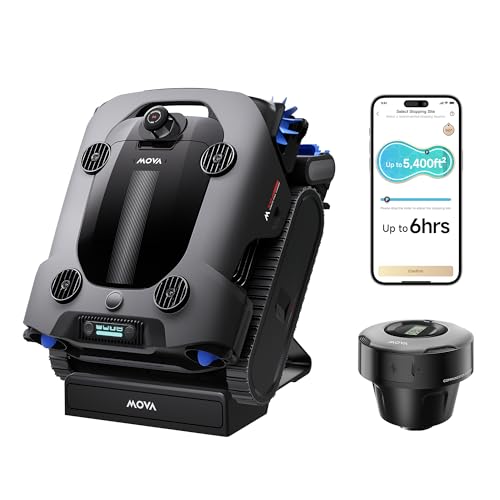

Sensors and Navigation Systems
The foundation of smart mapping is a suite of sensors. Many robotic pool cleaners use a gyroscope and accelerometer to track orientation and movement. These sensors help the robot understand its angle and acceleration, which is essential for maintaining a straight line or turning precisely.
Some advanced models incorporate cameras or lidar (light detection and ranging) to visually recognize pool walls, steps, and ladders. This data is fed into a processor that builds a virtual map. The more sensors the robot has, the more accurate its mapping becomes.
Mapping Algorithms and Cleaning Patterns
Once the robot has a map, it uses cleaning algorithms to determine the most efficient path. Instead of a random bounce pattern, it can follow a systematic grid, a spiral, or a lane-by-lane approach. This ensures full coverage without wasting battery or time on areas already cleaned.
The algorithm also adjusts for pool shape. For example, an oval pool might require a different pattern than a rectangular one. The robot processes the map in real time and continuously recalculates its route as it moves.
Learning and Adapting Over Time
Many smart mapping cleaners can learn your pool’s layout with each cycle. They store the map in memory, so the second cleaning run is faster and more efficient. Over several sessions, the robot fine-tunes its path to avoid obstacles and cover every inch.
This learning capability means the robot becomes smarter the more you use it. It also means it can adapt to changes, like a new pool ladder or floating toys, by updating its map on the fly.
Obstacle Avoidance and Edge Detection
Smart mapping isn’t just about cleaning; it’s also about avoiding damage. The robot uses its sensors to detect obstacles like pool steps, lights, and drains, and then navigates around them without bumping into them repeatedly.
Edge detection is another key feature. The robot knows when it reaches the pool wall and can follow it closely to clean the waterline. It also uses the map to avoid getting stuck in corners or against ladders.
App Connectivity and Real-Time Tracking
Many modern robotic pool cleaners connect to a smartphone app via Wi-Fi or Bluetooth. The app displays the robot’s map in real time, showing you its location and cleaning progress. You can monitor coverage, see which areas are done, and even customize cleaning schedules.
With app connectivity, you can also receive notifications when the cleaning cycle is complete or if the robot encounters an error. This makes it easy to manage your pool maintenance from anywhere.
How to Get the Most Out of Smart Mapping
- Keep the robot’s sensors clean, debris or algae can block readings and reduce accuracy.
- Ensure your pool’s water chemistry is balanced to prevent cloudiness that interferes with camera-based mapping.
- Update the robot’s firmware regularly if the manufacturer provides app updates.
- Run the robot on a consistent schedule so it can learn your pool’s layout over time.
- Remove large obstacles like toys or floats before starting a cycle to avoid confusing the map.
If your robot still isn’t cleaning effectively, the issue might not be mapping. Check out our guide on why your pool robot isn’t picking up debris for common causes and fixes.
Frequently Asked Questions
Does smart mapping work in all pool shapes?
Yes, smart mapping adapts to virtually any pool shape, including rectangular, oval, kidney, and freeform. The robot builds a map based on the actual boundaries it detects, so it can handle curves and irregular corners.
Can smart mapping avoid obstacles?
Yes, it can. Robots with smart mapping use sensors to detect obstacles like steps, ladders, and pool lights. They navigate around them without bumping into them repeatedly, reducing the risk of damage to both the robot and your pool.
Does smart mapping require a Wi-Fi connection?
No, the mapping itself works without Wi-Fi. The robot processes the map internally. Wi-Fi is only needed for app connectivity, real-time tracking, and firmware updates. The robot can clean and map effectively even without an internet connection.
How often does the robot update its map?
Most robots update the map continuously during each cleaning cycle. They also store the map in memory and refine it with every use. Some models fully recalibrate the map each time they start, while others keep a persistent map and adjust it.
Is smart mapping better than random cleaning?
For most pools, yes. Smart mapping covers the pool more efficiently, reducing cleaning time and battery usage. It also avoids the gaps and overlaps common with random bounce patterns, resulting in a more thorough clean.
Related Guides
- How Does AI Navigation Work in Robotic Pool Cleaners
- How Do Robotic Pool Cleaners Detect Obstacles
- Ultimate Guide to the Best Robotic Pool Cleaner Filters for
Closing
Smart mapping transforms how a robotic pool cleaner navigates, using sensors and algorithms to clean your pool systematically and avoid obstacles. To keep your robot performing at its best, regular maintenance is key. For tips on keeping your robot’s filters clean, read our guide on how often to clean your robotic pool cleaner filter.