You know the feeling: you run your hand along the pool wall and feel that gritty, rough layer of calcium or the slimy residue of stubborn algae. Standard pool brushes just slide over it, leaving the mess behind. That is where a dedicated scrubbing brush comes in. This guide covers the best pool cleaner scrubbing brush for stubborn debris, from hand-held pumice stones to heavy-duty wall scrubbers. Whether you own a concrete, vinyl, or fiberglass pool, we have evaluated eight top products to help you pick the right one.
If you are also looking for a brush compatible with robotic cleaners, check out our roundup of top pool robot replacement brushes for automated solutions.
Product Comparison




Buying Guide
Surface Compatibility
Before buying any brush, consider your pool surface. Concrete and gunite pools can handle stainless steel bristles and pumice stones, like those in the Pool Pumice Stone and 5 inch Stainless Steel Pool set. Vinyl liners, however, require softer bristles. The U.S. Pool Supply 13″ Pool Brush Head with Rubber uses rubber bristles that clean without scratching. Always match the brush material to your pool type to avoid damage.
Bristle Design and Reach
For stubborn debris lodged in corners, steps, or curved walls, look for brushes with specialized bristle arrangements. The TidyMister 17.5″ Pool Brush Head uses wave-shaped bristles and curved ends to reach tight spots. The U.S. Pool Supply 18″ Pool Brush Head 270° features bristles that wrap around the brush ends, ensuring contact with sloped surfaces. Wider brushes cover more area but may be less maneuverable in small spaces.
Handle Type and Ease of Use
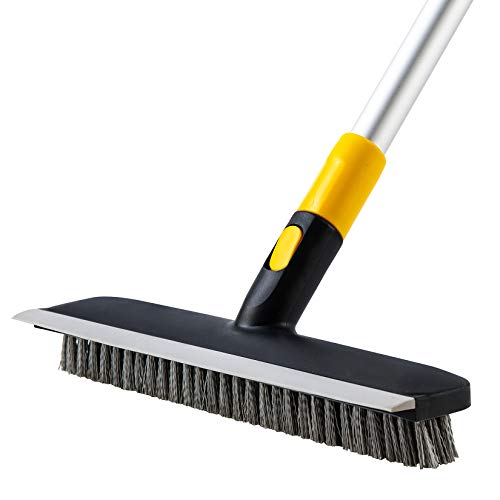
Manual pool brushing can be tiring, especially with a short pole. Many pool brushes attach to standard 1-1/4 inch telescopic poles, but some include their own handles. The Yocada Floor Scrub Brush Telescopic Handle 2 in 1 features an adjustable pole from 45 to 56 inches, plus a built-in scraper. The AIR U+ Floor Scrub Brush with Long Handle has a 360-degree rotating head for reaching tight corners. If you have limited mobility or a large pool, an ergonomic, extendable handle can make a big difference.
For more on brushing strategies and compatible accessories, browse our replacement brushes category for additional options.
Multi-Functionality
Some brushes offer extra utility beyond scrubbing. Models with built-in squeegees, like the U.S. Pool Supply rubber brush, can clear water and debris after scrubbing. The U.S. Pool Supply Hand-Held & Pool Pole Attachment set includes a hand-held sponge pad for detail work on tile and grout. If you often tackle multiple tasks, a multi-functional brush saves time and storage space.
Final Thoughts
For the most stubborn debris like calcium deposits and rust stains on concrete or gunite, the Pool Pumice Stone and 5 inch Stainless Steel Pool set delivers unmatched precision with its pumice stone and wire brush, while the U.S. Pool Supply 13″ Pool Brush Head with Rubber is your best choice for gentle yet effective scrubbing on vinyl liners, thanks to its rubber bristles and built-in squeegee. Both tools tackle tough grime without damaging your pool, so you can spend less time scrubbing and more time enjoying the water.
Frequently Asked Questions
What is the best brush for removing calcium deposits from pool tiles?
A pumice stone or a small stainless steel wire brush works well on concrete and plaster pool tiles. Use the Pool Pumice Stone and 5 inch Stainless Steel Pool set for spot-treating calcium rings at the waterline. Always avoid using these on vinyl liners to prevent scratching.
Can I use a stiff-bristle brush on a vinyl liner pool?
No, stiff nylon or stainless steel bristles can scratch vinyl liners. Instead, choose a brush with rubber or soft nylon bristles, such as the U.S. Pool Supply 13″ Pool Brush Head with Rubber. It is designed specifically for above-ground and vinyl-lined pools and includes a squeegee edge for gentle scraping.
How often should I scrub my pool to prevent stubborn debris buildup?
For most pools, brushing once a week is sufficient. If you notice algae spots or calcium deposits forming, brush every other day. Using a robotic cleaner with a dedicated scrubbing brush can reduce manual effort. For automated options, see our guide to robotic pool cleaner replacement brushes in 2026.
What is the difference between a regular pool brush and a scrubbing brush?
A regular pool brush is designed for routine cleaning of loose dirt and algae, while a scrubbing brush has stiffer bristles, abrasive pads, or pumice stones to tackle caked-on calcium, rust, and stubborn debris. Scrubbing brushes are best used as a spot treatment for specific problem areas rather than whole-pool cleaning.